
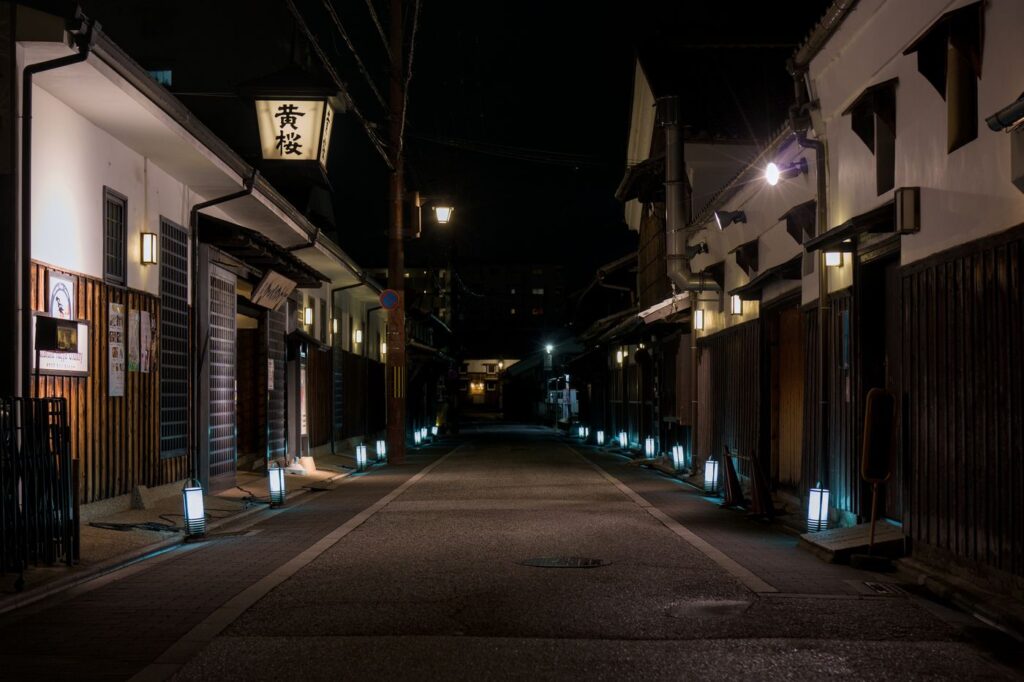
Japanese names with dark meanings are hugely popular with writers, gamers and anime fans looking for the perfect name for a character. Words like Yami (darkness), Kage (shadow) and Shura (a realm of endless battle) sound striking and carry deep cultural associations. But there is an important distinction to make: most of these are words and fictional names, not names that real Japanese parents give their children. This guide lists Japanese names and words with dark meanings, with their kanji, and explains how they are actually used.
For names that Japanese people really use, see our guide to top Japanese names.
Why Real Japanese Names Are Rarely Dark
Japanese parents choose the kanji for a name carefully, because each character carries meaning. Names usually express hopes for the child: health, kindness, brightness, success or a connection to nature. Characters linked to death, suffering or misfortune are avoided, just as English speakers would not name a baby “Grave” or “Doom”.
There are also legal limits. Given names must be written with hiragana, katakana or kanji from the officially approved lists: the jōyō kanji in general use and the additional jinmeiyō kanji approved for names. Local registrars can also refuse a name they consider harmful to the child.
The Akuma Case
The most famous example happened in 1993, when a father in Akishima, Tokyo, tried to register his son as 悪魔 (Akuma), meaning “devil”. The city refused, the dispute went to court and became national news, and the parents eventually gave the boy a different name. The case is still cited whenever unusual names are debated in Japan, and it showed that officials can reject a name judged to be an abuse of parental naming rights.
Names Meaning Darkness, Night and Shadow
| Name | Kanji | Meaning | Real-life use |
|---|---|---|---|
| Yami | 闇 | Darkness | Common in fiction; not a usual given name |
| Kage | 影 | Shadow | Fiction and ninja stories; appears inside some older names |
| Yoru | 夜 | Night | Occasionally used in modern names for its poetic sound |
| Kuro | 黒 | Black | Popular in fiction and as a pet name; in real surnames such as Kuroda |
| Rei | 黎 | The darkness just before dawn | A real given name, chosen for its sense of a new beginning |
| Oboro | 朧 | Hazy, dim, as in misty moonlight | Mostly literary and fictional |
| Yoi | 宵 | Early evening, dusk | Rare, used in poetic names |
Notice that the real names in this group, such as Rei and Yoru, are chosen for beauty rather than darkness. Night and dusk are poetic in Japanese culture, linked to the moon, quiet and reflection.
Names Linked to Death and the Underworld
- Shinigami (死神): “death god”. Not a name but a type of spirit, made famous worldwide by Death Note and Bleach.
- Yomi (黄泉): the land of the dead in Japanese mythology, where the goddess Izanami went after her death. Used as a character name in anime and games.
- Mei (冥): dark, the underworld. The same kanji appears in 冥王星 (Meiōsei), the Japanese name for Pluto. Real girls called Mei almost always use other kanji, such as 芽衣 or 明.
- Mukuro (骸): corpse or skeleton. Used for characters in manga such as Yu Yu Hakusho; never a real given name.
- Shura (修羅): from the Buddhist asura realm of constant conflict. The expression shuraba (修羅場) means a scene of carnage, and today also a messy emotional showdown.
- Rengoku (煉獄): purgatory. Best known as the surname of Kyōjurō Rengoku in Demon Slayer.
Names Linked to Demons and Spirits
- Oni (鬼): the horned demons of Japanese folklore. The kanji appears in real surnames such as Onizuka (鬼塚), the family name of the founder of the Onitsuka Tiger shoe brand, and Kitō (鬼頭).
- Yasha (夜叉): a type of demon from Buddhist tradition, familiar to anime fans from InuYasha.
- Akuma (悪魔): devil. As seen above, not acceptable as a real name.
- Yūrei (幽霊): ghost, the restless spirit of the dead in Japanese folklore and horror films.
- Kitsune (狐): fox. Not dark in itself, but fox spirits in folklore are often tricksters that possess or deceive people.
Names With Melancholy or Bittersweet Meanings
Some real names carry a gentler kind of darkness: a sense of transience that is deeply rooted in Japanese aesthetics, the idea of mono no aware, the gentle sadness of things passing.
- Setsuna (刹那): “an instant”, from a Buddhist term for the smallest unit of time. It is used as a real given name and also appears in fiction, suggesting a fleeting, precious moment.
- Rei (零): zero. Rei Ayanami from Neon Genesis Evangelion made the sound famous, though real people named Rei usually use other kanji.
- Sakura (桜): cherry blossom. One of the most common girls’ names, and at the same time a symbol of life’s brevity, because the blossoms fall within days.
Real Surnames With Dark Kanji
Surnames are a different story. Because many were taken from places and landscape features, some contain kanji that look dark in isolation but are completely ordinary:
- Kurosawa (黒沢 or 黒澤): “black swamp”, as in the film director Akira Kurosawa.
- Kuroda (黒田): “black rice field”, a well-known samurai family name.
- Onizuka (鬼塚): “demon mound”.
- Kageyama (影山): “shadow mountain”.
Nobody in Japan reads these names as sinister, in the same way English speakers do not think twice about the surname Blackwood.
Tips for Using Dark Japanese Names
- For fiction and games: combine an ordinary surname with a meaningful given name, or use a nickname or title as many anime characters do. A character called simply “Yami” will read to Japanese speakers as a nickname, not a real name.
- Check the kanji: the same sound can be written with very different characters. Mei can mean “sprout” or “underworld” depending on the kanji.
- Be careful with 死 (death) and 四 (four): the number four is read “shi”, like death, and is widely avoided.
- Ask a native speaker before using a name for anything public, such as a brand, a tattoo or a published character.
Conclusion
Japanese has a rich vocabulary of darkness, from Yami and Kage to Yomi, Shura and Oni, drawn from mythology, Buddhism and folklore. These words make powerful names for characters, but real Japanese names lean toward light and hope, and the law gives officials the power to refuse names like Akuma. The most authentic “dark” names are the poetic ones: night, dusk, the moment before dawn and the fleeting beauty of things that do not last.